


Helping You Regain Strength, Stamina, and Life After Cancer
Author: Dr. Tausiya Ansari PT, Certified Oncophysiotherapist & Lymphedema Therapist
Introduction
Your Victory Is Won, Now Reclaim Your Energy!
You faced cancer and won—that is a tremendous victory! But many resilient survivors find themselves facing a quiet, stubborn challenge afterward: post-cancer fatigue. This isn’t just regular tiredness; it’s a profound exhaustion called Cancer-Related Fatigue (CRF). It can cling on for weeks, months, or even years, draining your energy for daily life, work, relationships, and emotional health.
Are you constantly asking, “Why am I still so exhausted after chemo?” or “What are the safe exercises for me now, especially here in India?” You are absolutely not alone. This guide, created by a certified oncophysiotherapist, gives you 10 proven physiotherapy exercise strategies you can start today to safely regain your energy, functional strength, and independence. Let’s move from exhaustion to energy management
Understanding Cancer-Related Fatigue (CRF): More Than Just Feeling Tired
CRF is defined as a persistent sense of tiredness or exhaustion related to cancer or its treatment that isn’t relieved by rest. It’s often described as a ‘heavy’ feeling that impacts your whole day.
CRF is one of the most common long-term side effects, impacting up to 30-50% of cancer survivors.
Here in India, this fatigue can sometimes be intensified by factors unique to our environment, such as underlying nutritional deficiencies, managing co-morbidities (like PCOS or thyroid issues), and limited, costly access to specialized cancer rehabilitation services.
If this profound tiredness is ignored, it creates a negative cycle: reduced physical activity leads to muscle loss, which makes movement harder, leading to worse mood and overall poorer quality of life. Breaking this cycle starts with safe, targeted movement.
Why Oncophysiotherapy is Your Secret Weapon Against Fatigue
As a Certified Oncophysiotherapist & Lymphedema Therapist, I specialize in helping survivors rebuild safely. Targeted physiotherapy is not just about muscle; it’s about strategic, compassionate recovery:
Rebuilding Your Engine: Physiotherapy helps rebuild muscle strength, boost cardiorespiratory fitness (heart and lung health), and restore mobility. This direct improvement in physical capacity naturally reduces your sensation of fatigue.
Tackling Co-existing Issues: CRF is often worsened by related problems like chronic pain, lymphedema (swelling), stiff scar tissue, or nerve issues (neuropathy). Your physiotherapist addresses these connected problems holistically.
Safety and Customization: We provide structured movement plans, accountability, and progress tracking. Our exercises are specifically adapted for cancer survivors, offering safe modifications, constant awareness of treatment side-effects (like bone density changes or chemo neuropathy), and culturally relevant home-exercise options for India.
Combining an evidence-based exercise plan with your unique health profile is the most powerful tool in your recovery toolkit.
How to Use This Guide Safely and Effectively
Think of this guide as your personalized, gentle roadmap back to strength.
Start Slow : If treatment ended recently, begin at the lowest intensity. Always consult your oncologist or physiotherapist first.
Consistency : Aim for 3-4 sessions per week (20-30 minutes), balancing this with a day of gentle movement like light walking or yoga. | Exercise Frequency for CRF |
Equipment: All exercises use minimal, easily found equipment—a chair, a pillow, and a simple resistance band (often ₹300-₹1000 in India).
Modify: Adjust based on your treatment history (e.g., shoulder stiffness after breast surgery, or neuropathy). Listen to your body, not the clock. | Cancer Rehab Modifications |
Track Progress: Use a simple log to note energy before vs. after, perceived exertion, mood, and sleep quality. Small progress adds up to big gains!
Safety First: Stop immediately if you feel severe sharp pain, dizziness, unusual shortness of breath, sudden swelling, or chest pressure. | CRF Safety Guidelines |
The Top 10 Fatigue-Busting Exercises (Home Edition)
Here are the 10 exercises, designed for minimal equipment and maximum effect in the comfort of your Indian home.
1. Seated Marching with Resistance Band
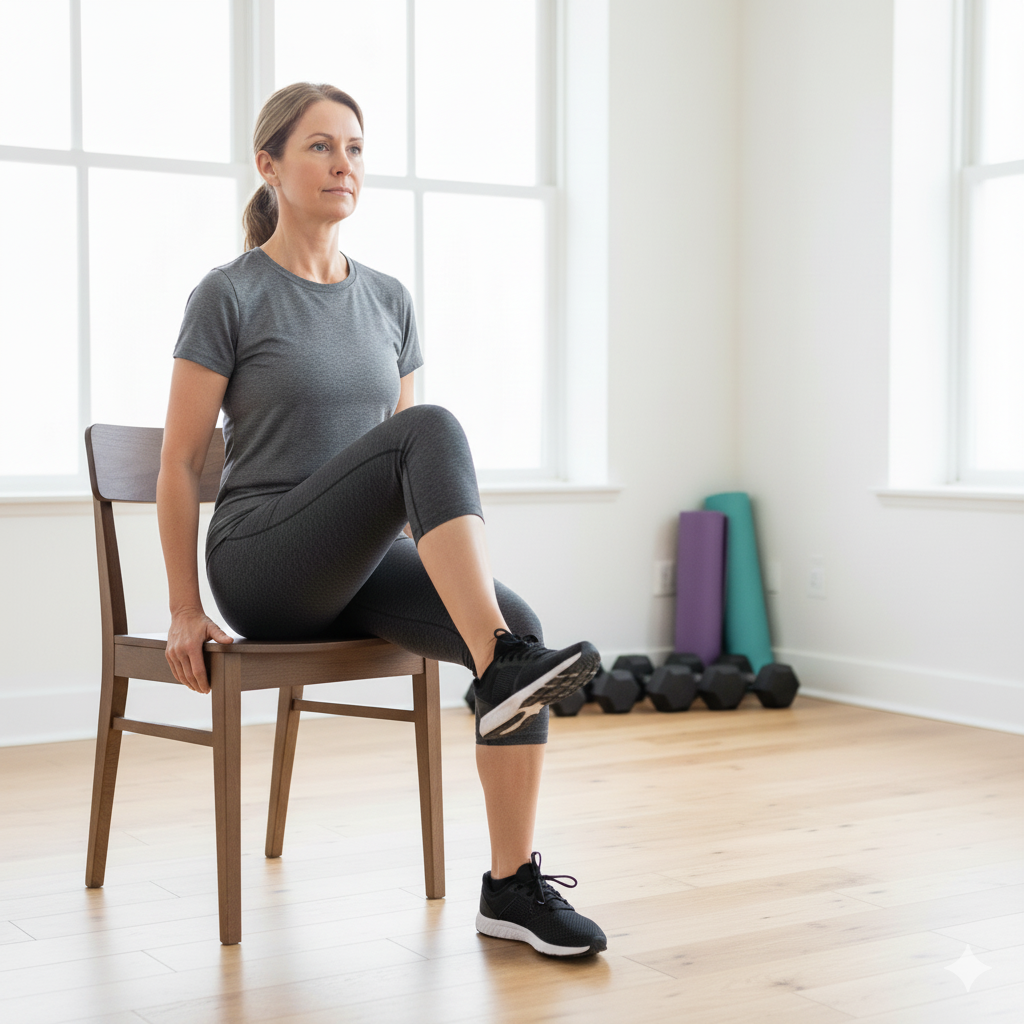
Setup: Sit upright on a sturdy chair. Loop a light resistance band around both feet.
How to Do: Lift one knee at a time as if marching, keeping your posture tall and feeling the gentle pull of the band.
Goal: 3 sets × 20 marches (10 per leg).
Modification: Start without the band.
Why it Helps: This low-impact movement activates your hip flexors, increases circulation (crucial for managing neuropathy), and counters the heaviness of sitting fatigue.
2.Wall Push-Ups (Standing)
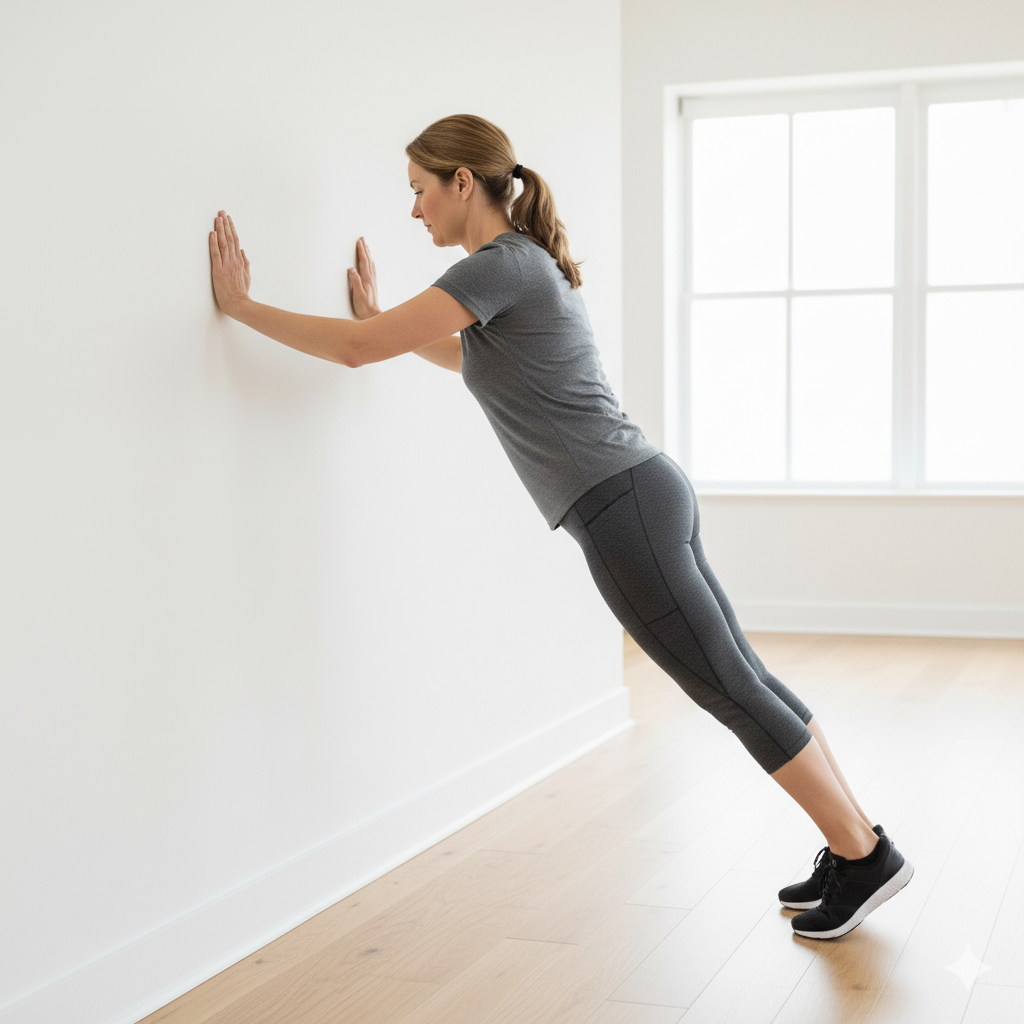
Setup: Stand about one arm’s distance from a stable wall. Place hands on the wall, slightly wider than shoulder height.
How to Do: Slowly bend elbows and lean towards the wall, then push back until arms are straight. Keep your body straight.
Goal: 3 sets × 12 reps.
Modification: Use a lower countertop or table for an easier angle.
Why it Helps: Builds functional upper body strength (chest, shoulders, arms) and endurance with minimal joint strain, making it perfect for rebuilding muscle post-treatment.
3. Bridge with Pillow Support
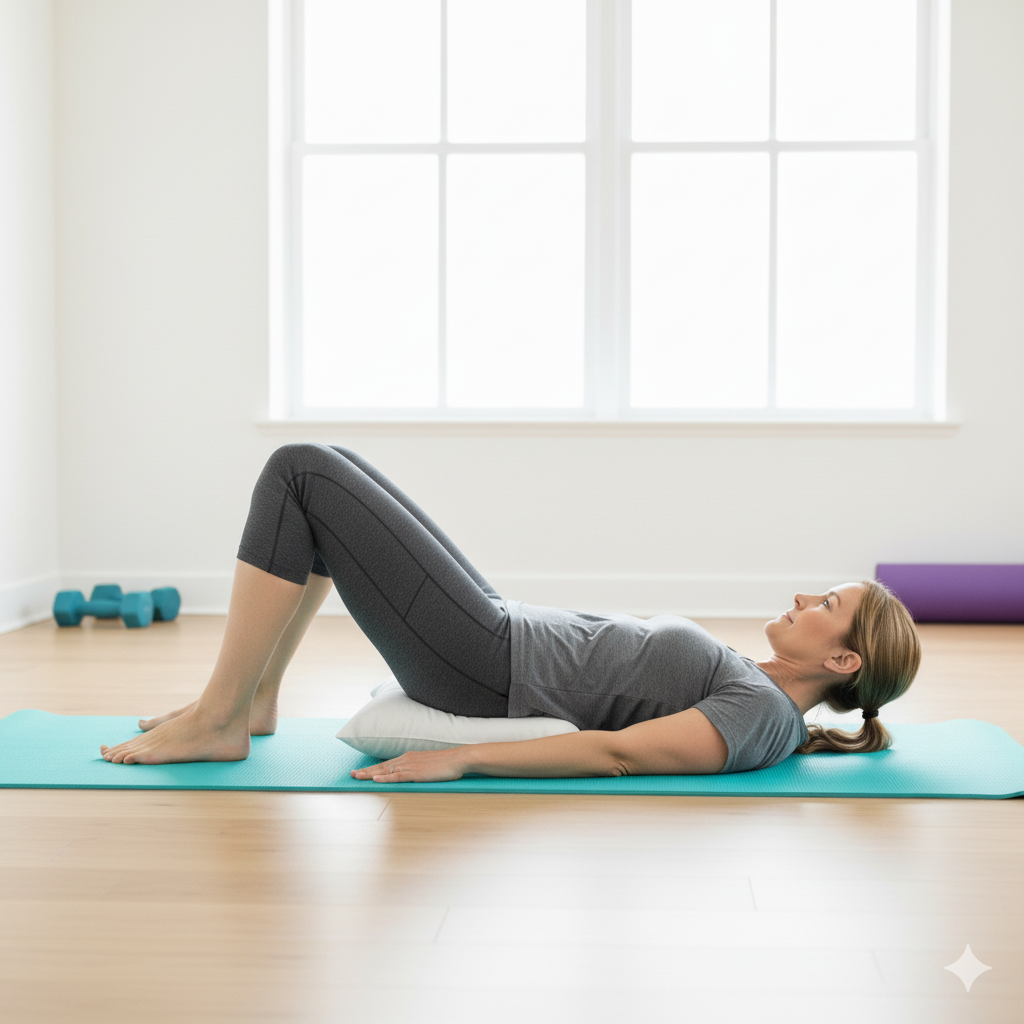
Setup: Lie on your back, knees bent, feet flat. Place a small, folded pillow or cushion under your hips/lower back for gentle support if you have pain.
How to Do: Squeeze your glutes (buttocks) and lift your hips toward the ceiling. Hold for 2 seconds, then slowly lower.
Goal: 3 sets × 15 reps.
Modification: Only lift halfway or use the pillow throughout for continuous support.
Why it Helps: Activates the glutes and core, improving pelvic control and stability, which are often weakened and contribute to fatigue-reduced movement.
4. Step-Up on Low Platform
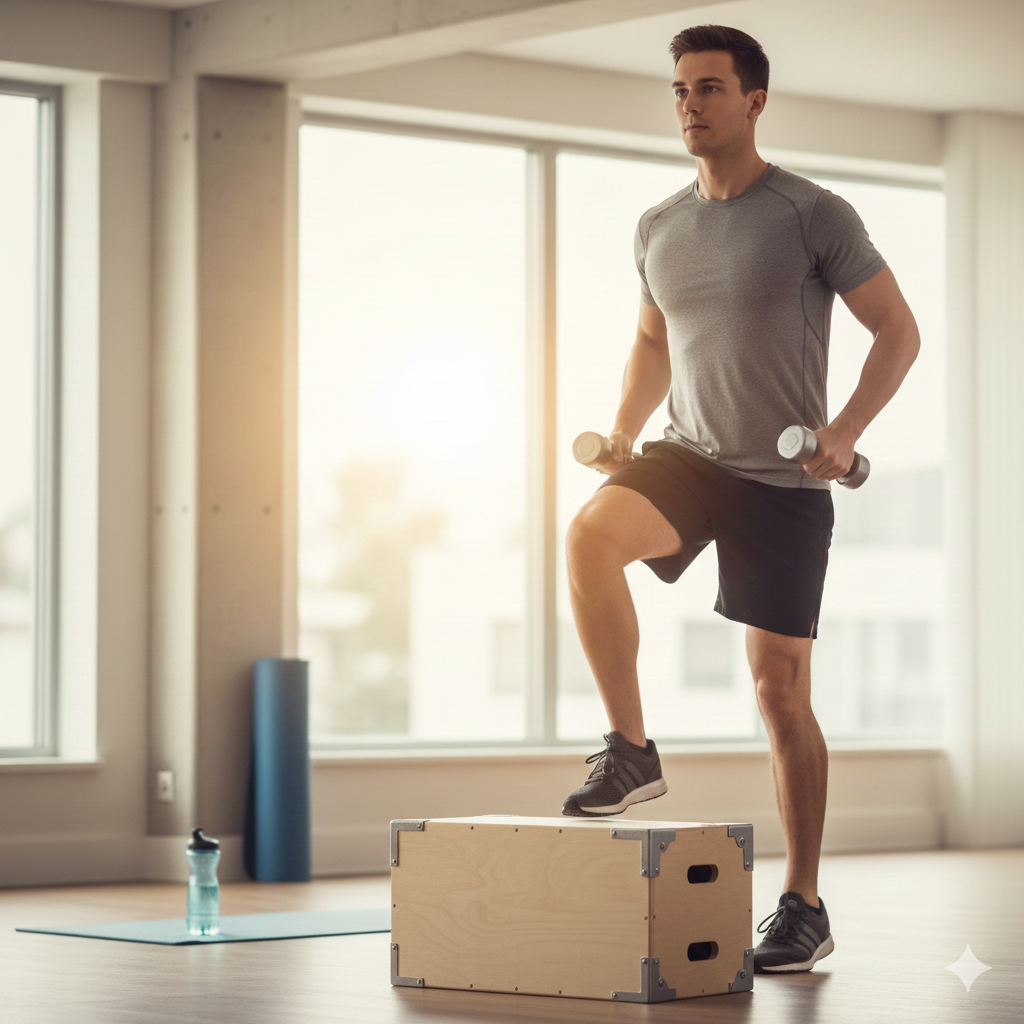
Setup: Use a sturdy, stable step or low platform (~10–15 cm high). In Indian homes, a robust, non-slip stool or the bottom step of a staircase works perfectly.
How to Do: Step up with the right leg, then bring the left leg up. Step down with the right leg, then the left. Alternate the leading leg.
Goal: 2 minutes continuous or 3 sets × 12 reps each leg.
Modification: Use a wall or railing for support. If too fatigued, just practice static “toe lifts” instead of the full step.
Why it Helps: A key functional movement that builds lower-limb strength and gently increases cardiovascular demand, improving stamina.
5. Resistance Band Rows (Seated)
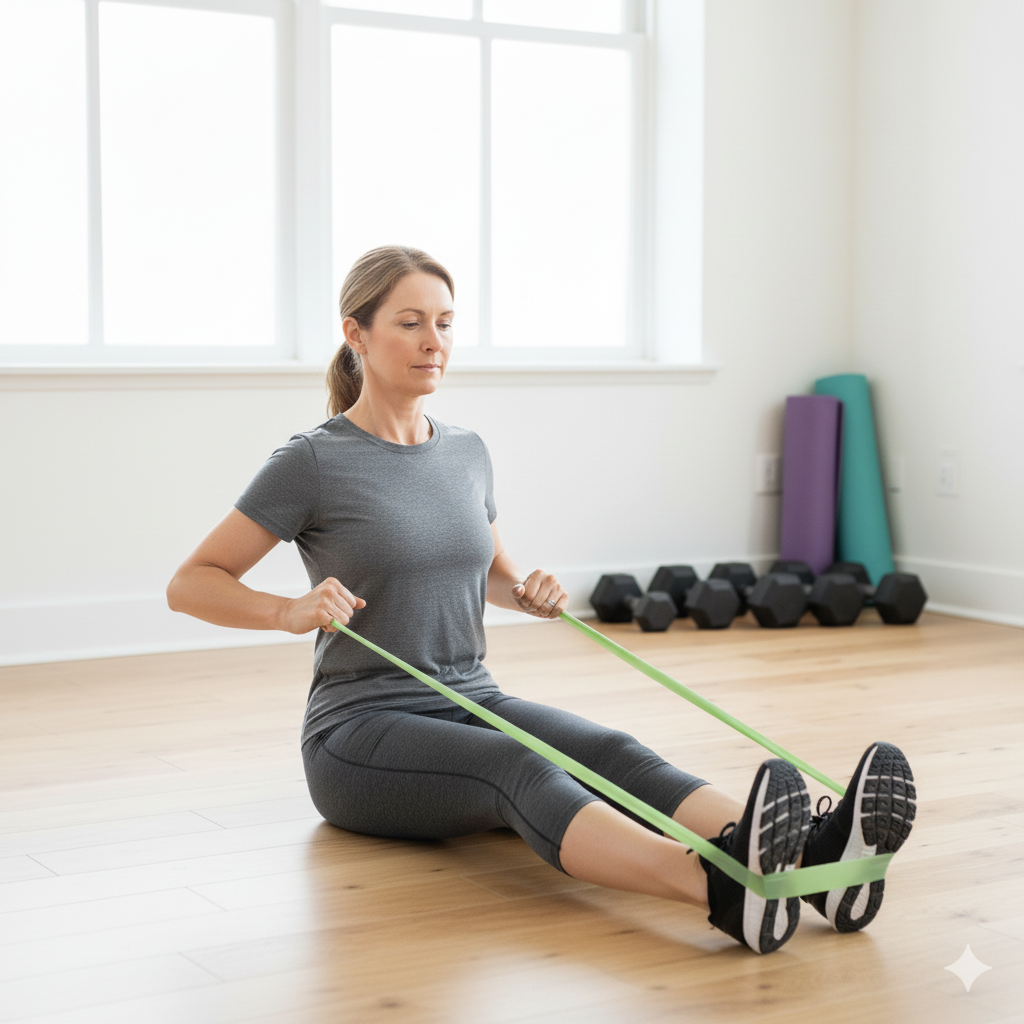
Setup: Sit on the floor or a chair with legs extended. Loop the resistance band around your feet (or anchor it to a stable piece of furniture at foot-level). Hold ends in both hands.
How to Do: Pull the band toward your body, bending your elbows and squeezing your shoulder blades together. Slowly release.
Goal: 3 sets × 15 reps.
Modification: Use a light, rolled-up towel or a dupatta if you don’t have a band.
Why it Helps: Strengthens the muscles between the shoulder blades and upper back, helping to counter the common “posture fatigue” and improve shoulder health, particularly vital for breast cancer survivors.
6. Bird-Dog Variation on Table
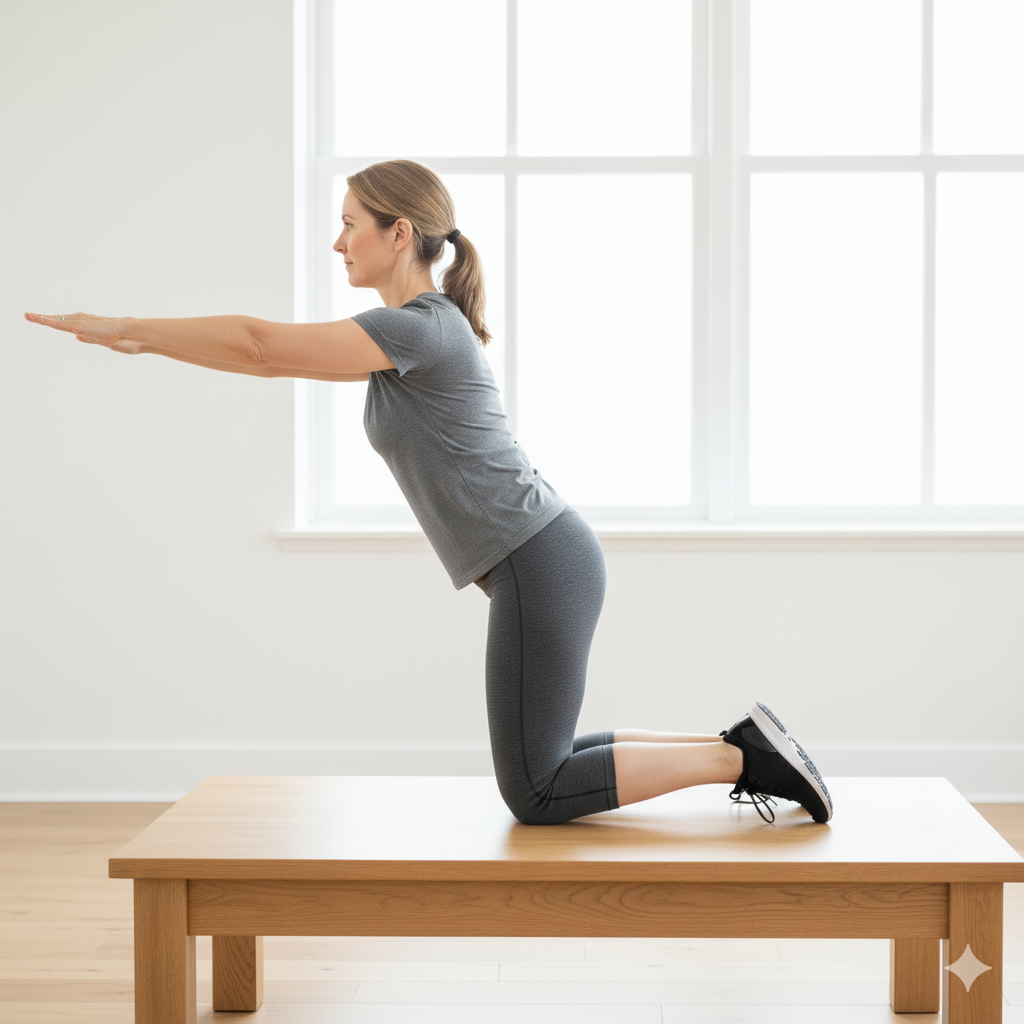
Setup: Kneel on all fours, placing your knees and hands on a stable table or the edge of a bed (using a higher surface reduces the load on your core).
How to Do: Slowly extend your right arm straight forward and your left leg straight back, keeping your back flat. Hold 2 seconds; return. Switch sides.
Goal: 2 sets × 10 reps each side.
Modification: Only do the arm extension or leg extension if balance or energy is low.
Why it Helps: An excellent exercise for core stability, balance, and coordination, countering fatigue by improving neuromuscular control and reducing strain on the lower back.
7. Calf Raises (Double or Single)
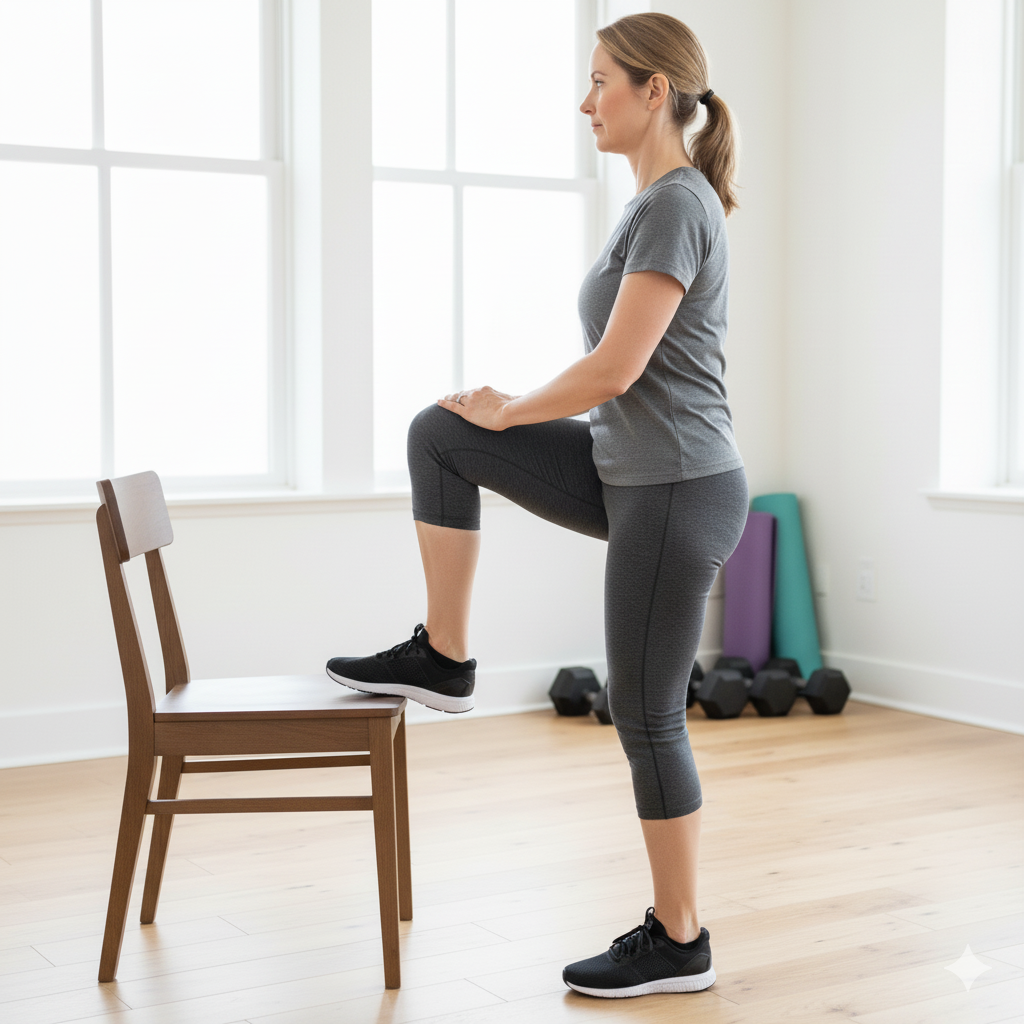
Setup: Stand near a wall or the back of a sturdy chair for support.
How to Do: Rise up onto your toes, hold for 1 second, and slowly lower down.
Goal: 3 sets × 15 reps.
Modification: Perform the exercise while seated if standing is too challenging.
Why it Helps: This simple move improves circulation in the lower legs, helping reduce peripheral fatigue and counteracting potential ankle stiffness from reduced mobility or neuropathy.
8. Side-Lying Hip Abduction
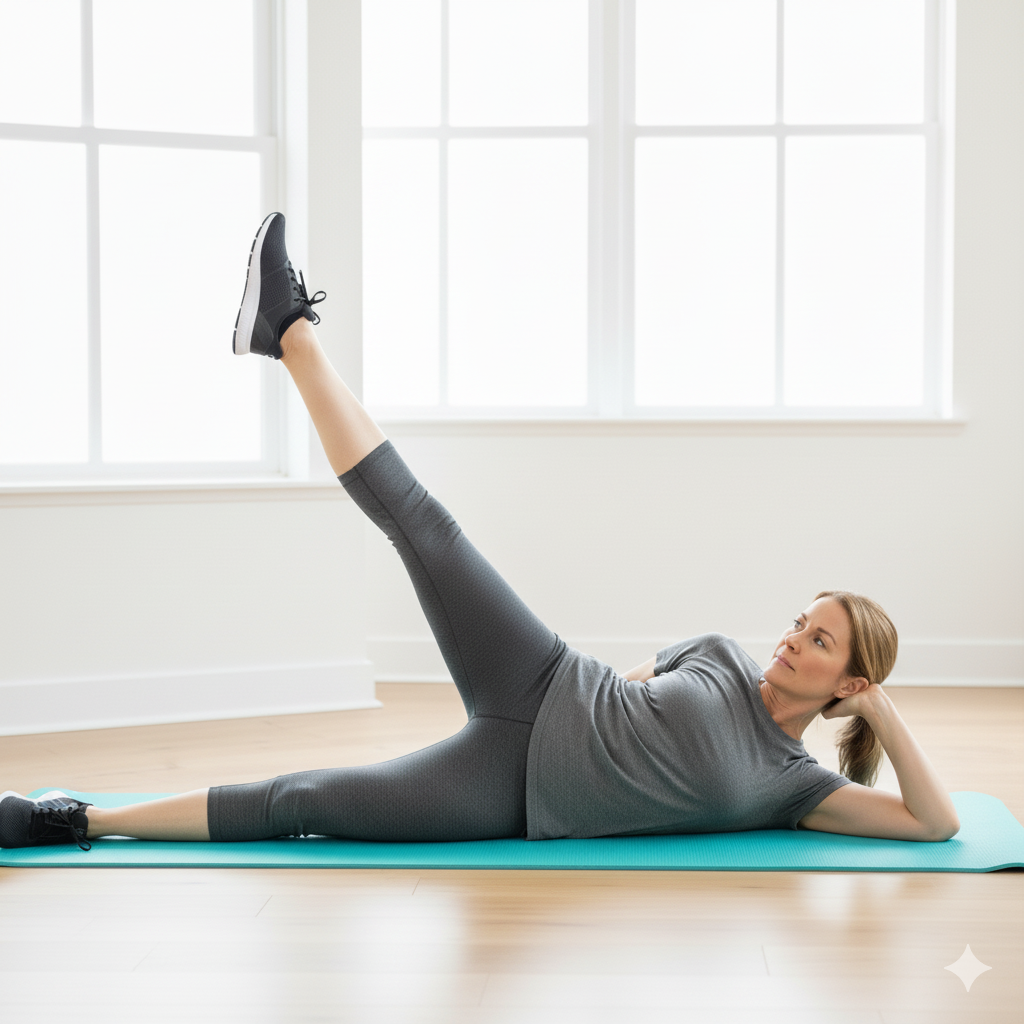
Setup: Lie on your side. Bend your bottom leg for stability. Keep your top leg straight or slightly bent. Use a pillow under your head.
How to Do: Lift your top leg toward the ceiling (no higher than hip level) \rightarrow hold 1 second \rightarrow slowly lower.
Goal: 3 sets × 12 reps each side.
Modification: Do fewer repetitions, or gently hold the top leg for support.
Why it Helps: Strengthens the hip and outer thigh muscles (glutes/abductors), which often weaken due to post-treatment inactivity, improving walking and daily function.
9. Chair Squats (Assisted)
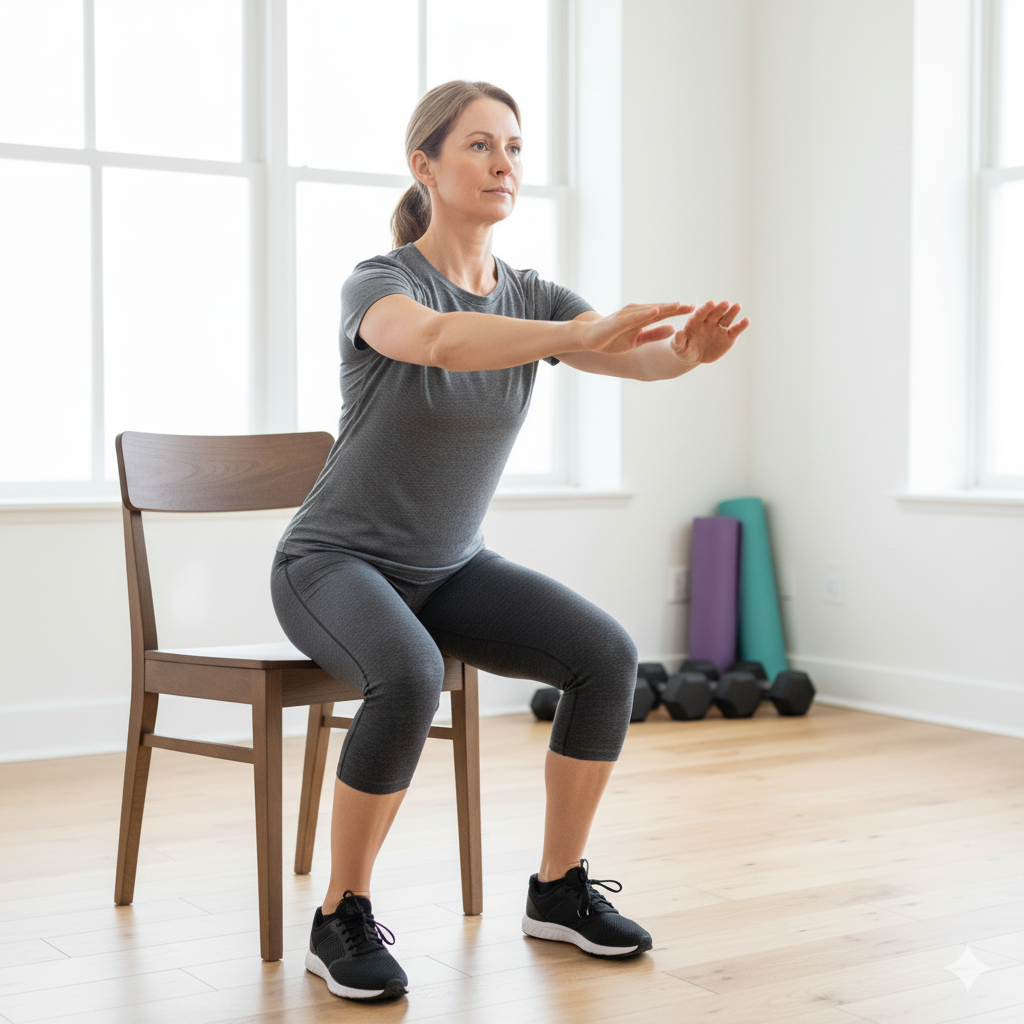
Setup: Stand in front of a sturdy chair or sofa.
How to Do: Slowly sit back into the chair, then stand up again, controlling the movement throughout. Imagine you are lightly tapping the seat.
Goal: 3 sets × 10 reps.
Modification: Use the chair’s arms for support to push up, or reduce the range of motion (don’t sit all the way down).
Why it Helps: A core functional exercise that strengthens your major lower body muscle groups (glutes, quads), which translates directly to improved functional mobility and reduced effort in daily tasks.
10. Deep Breathing with Arm Reach


Setup: Sit or stand comfortably with feet flat.
How to Do: Inhale slowly and deeply, raising both arms overhead. Exhale slowly as you bring your arms back down. Focus on expanding your belly and chest.
Goal: 2 sets × 10 breaths.
Modification: Do smaller arm movements if you have shoulder stiffness or pain.
Why it Helps: This is a crucial “energy-reset” exercise. It enhances oxygenation, helps reduce muscle tension, and promotes relaxation, providing a mental and physical break from chronic fatigue.
Safety, Modifications & The Indian Home Context
Safety First
Always check with your oncologist/physio before starting, especially if you have had recent surgery, radiation, bone metastases, or lymphedema.
Stop immediately if you feel sharp pain, dizziness, chest pressure, swelling, or unusual shortness of breath.
Modifications for Indian Homes:
Many survivors in India don’t have access to full gym equipment, but that is not a barrier! These exercises are designed for minimal gear: a chair, a pillow/cushion, a resistance band (or a sturdy towel), and a stable stool or platform.
Time & Progression:
Start small: If you’re severely fatigued, begin with just 2–3 exercises in the initial week.
Gradual Increase: Slowly build up to the full list by week 4-6. Track your progress (energy, mood, sleep) and use that data to gradually increase intensity, not guesswork.
Cost-Sensitive Options:
Resistance bands are highly effective and inexpensive (easily found for ₹300-₹1000 online or in local markets).
Utilize household furniture as stable support.
Check for free YouTube clips or suggested videos!
Cultural & Lifestyle Factors:
We understand that fatigue often conflicts with domestic responsibilities. Try these strategies:
Schedule two short 10-15 minute mini-sessions instead of one long workout.
Use early mornings or times immediately after a short afternoon rest when energy tends to be highest.
Your Next Step: Take Control of Your Recovery
If you are ready to stop managing fatigue and start regaining your strength, don’t just read these exercises—do them!
Exclusive Free Resource
I invite you to download my FREE PDF checklist of these 10 exercises, complete with photo guides and a progression log to track your energy and strength gains.
Download Your Free CRF Exercise Checklist Here!
Need a Deeper Dive?
Consider my ebook: Stronger Every Day: A Cancer Survivor’s Path to Physical and Emotional Recovery (available on Amazon India). It’s packed with survivor stories, step-by-step rehab strategies, and mindset guidance—the perfect companion for your recovery journey.
📞 One-on-One Support
If you need personalized guidance, a full assessment, or have specific post-treatment complications, feel free to book an online consultation with me:
🌐 Book Online Consultation: www.canrehabpt.com
📧 Email: canrehabpt@gmail.com
Related Resources & Internal Links
Read more: Mental Health & Rehabilitation: Navigating the Emotional Challenges of Cancer Recovery
Related article: Exercise After Cancer: Safe Ways to Get Started
Explore: Lymphedema Management for Breast Cancer Survivors in India
Conclusion: Your Future Is Defined by Strength, Not Fatigue
Fatigue after cancer treatment is a real challenge, but it absolutely does not have to define your future.
With consistent, safe, physiotherapy-led movement and the right mindset, you have the power to regain your energy, rebuild your strength, and rediscover the life you deserve. Use this guide, tailor the exercises to your condition, and focus on moving one small step at a time.
Remember this: It’s not about going fast; it’s about getting stronger every single day.
Stay hopeful, stay active—and let your energized recovery journey begin!
Warmly,
Dr. Tausiya Ansari (PT)
Certified Oncophysiotherapist & Lymphedema Therapist
Mumbai, India